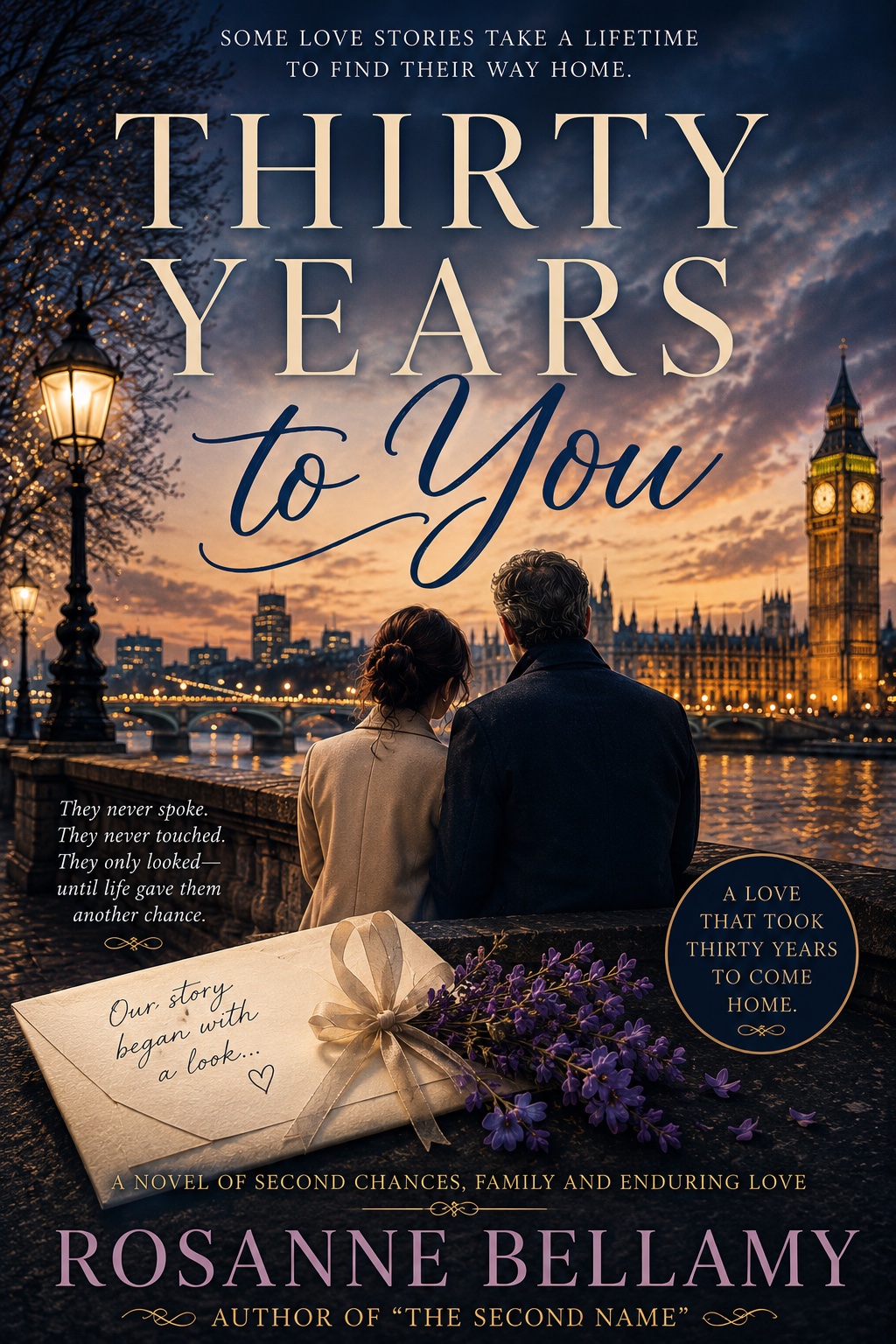
The Story Behind Thirty Years to You
Where does memory end and fiction begin?
Some stories begin entirely in the imagination. Others have been quietly waiting for years before we realise they are stories at all.
Thirty Years to You was inspired by true events.
Its beginnings reach back to experiences from my school and university years, and to moments that came later — encounters, memories and emotions that remained with me long after the circumstances themselves had passed.
But this is a novel, not a memoir.
The people who inspired parts of the story are not the characters who eventually appeared on the page. Names have changed. Circumstances have changed. Imagination has filled the spaces between memory and possibility. Elliot, in particular, belongs to the novel. There may once have been someone who planted the smallest seed of his character, but the man readers meet in Thirty Years to You has been shaped by fiction.
And then there comes a point in the story where even I know exactly where reality ends.
The email.
When Elliot's email reaches Romy, the novel crosses a line. From that moment onwards, what happens belongs to fiction.
Or perhaps I should say: for now, it belongs to fiction.
Because writers sometimes give their characters the moments that life never gave them. We allow them to say the words that remained unsaid, open doors that stayed closed, and discover what might have happened if life had taken one slightly different turn.
And perhaps that is where Thirty Years to You became particularly personal for me.
Everything that follows Elliot's email is imagined — but somewhere inside that imagination lives a question.
Could it ever happen?
Could life, after all those years, unexpectedly imitate the fiction?
I don't know.
Sometimes I wonder.
Perhaps that's why certain stories stay with us. They aren't simply about what happened. They're about what happened, what didn't happen, and what still might.
For now, Romy and Elliot get to discover the answer before I do.
And perhaps that is exactly where their story should remain.
— Rosanne Bellamy
Author of Thirty Years to You
What do you think?Do you believe some stories—and some people—can find their way back to us, even after many years?
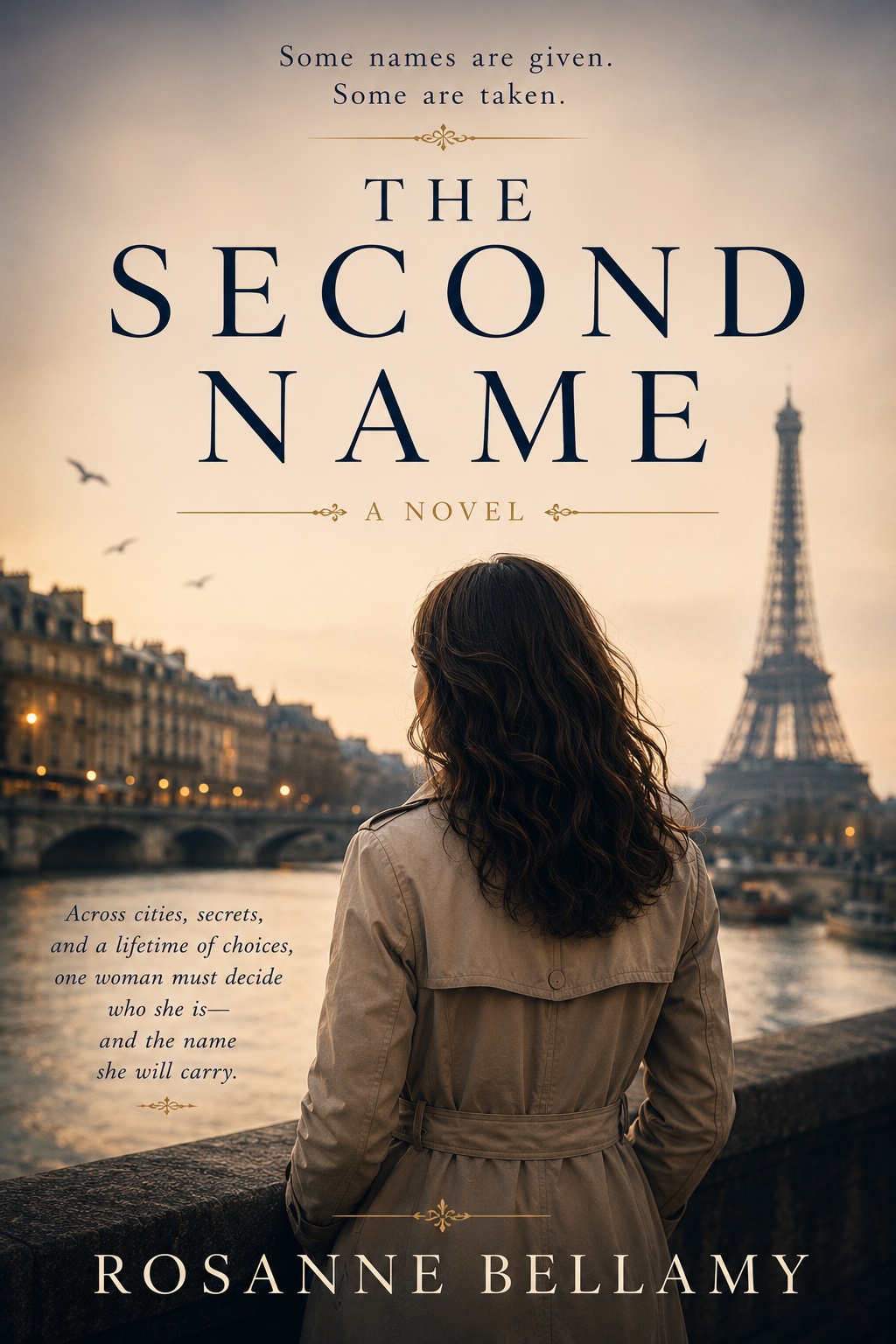
Why I Wrote The Second Name
Would anyone notice if you disappeared?
It began with a question.
Not a dramatic question. Not one involving danger or escape.
A much quieter one.
If you simply stepped away from your life, how long would it take before somebody noticed?
That question became Margot Lemaire.
Margot lives independently in Paris, works as a translator, visits the same café, walks familiar streets and has constructed a life that is comfortable, orderly and reassuringly predictable.
She isn't unhappy.
And perhaps that is important.
Because The Second Name was never intended to be a story about a woman running away from a life she hates. I was much more interested in a woman looking at a perfectly acceptable life and suddenly wondering: Is being known the same thing as being noticed?
So Margot decides to find out.
She steps away from her ordinary life for a while and chooses another name.
Camille Martin.
To Margot, the name is almost incidental. A name she believes she has simply invented for an experiment.
Except she hasn't.
And that is where the question that began the novel became something else entirely.
What if a name could remember something that you couldn't?
What if the identity you chose accidentally led you towards an identity that had once been chosen for you?
And what if the people who loved you most had spent years making sure you would never discover why?
Suddenly, Margot's experiment in disappearing became a journey into memory, family, identity and the strange ways in which the past survives inside us, even when we believe we have forgotten it.
Then there was Gabriel.
I didn't want Margot's relationship with Gabriel to feel like a conventional romance arriving conveniently alongside the mystery. Their connection needed to complicate things.
Gabriel sees Margot differently. He challenges her. Irritates her. Understands more than she would sometimes like him to. And, increasingly, he forces her to confront something perhaps more frightening than discovering the truth about her past: allowing somebody to truly know her in the present.
That, for me, became one of the most important ideas in The Second Name.
We inherit so much without choosing it. Our families. Our histories. Other people's decisions. Their secrets. Their mistakes. Even the names we are given.
But eventually, there comes a moment when inheritance meets choice.
Margot begins the novel wondering whether anyone would notice if she disappeared. By the end, the question has changed.
It is no longer simply: Who would notice if I were gone?
It is: Who am I when I choose to stay?
Perhaps that is why the words on the cover came to mean so much to me:
Some names are given. Some are taken.
Because The Second Name is ultimately not about discovering which name is the right one. It is about discovering that the person who gets to decide who you become is you.
— Rosanne Bellamy
Author of The Second Name
And now, a question for you…If you disappeared from your everyday life without telling anyone, who do you think would notice first—and how long would it take?
Some Names Are Given. Some Are Taken.
What does a name really say about who we are?
We are given names before we have any understanding of what they mean.
Someone chooses them for us. Perhaps because they belonged to someone we loved. Perhaps because of a memory, a tradition, a place, or simply because our parents liked the sound of them.
And then, somehow, we grow into them.
Our names begin to collect pieces of our lives. They appear on schoolbooks and birthday cards, passports and letters, certificates and contracts. They are spoken by people who love us, shouted across rooms, whispered intimately, shortened by friends and occasionally pronounced in a way that tells us immediately that we are in trouble.
Over time, a name becomes so familiar that we rarely stop to think about it.
Until something changes.
Some people take another name through marriage. Some reclaim a name they once had. Some shorten theirs, alter it, hide behind another one or choose an entirely new one.
And sometimes a name carries a history its owner knows nothing about.
That idea fascinated me while writing The Second Name.
When Margot decides to disappear temporarily from her ordinary life, she needs another identity. She chooses the name Camille Martin almost instinctively.
To her, it means nothing.
But names, like memories, can have a curious way of surviving.
What if we remember things without knowing that we remember them?
A sound. A place. A smell. A name.
What if something buried so deeply that our conscious mind can no longer reach it still manages, somehow, to find its way back to us?
For Margot, the name Camille becomes the first loose thread. She pulls it. And slowly, the carefully constructed story of who she believes herself to be begins to unravel.
But the idea of a second name became about much more than the mystery at the centre of the novel.
It made me think about identity itself.
How much of ourselves do we inherit?
We inherit families, histories and memories. We inherit other people's decisions—sometimes even decisions made long before we were old enough to understand them.
Yet there comes a point when we begin making decisions of our own.
We decide what to keep. What to forgive. What to leave behind. And perhaps even who we want to become.
That is where the words that came to represent The Second Name found their meaning for me:
Some names are given. Some are taken.
A given name can tell us where we began. A chosen name can sometimes tell us where we are going.
And perhaps neither one, by itself, can ever completely define us.
Because ultimately, The Second Name asks a question that reaches beyond Margot's mystery: Are we the person our past created—or the person we choose to become after we discover the truth about it?
— Rosanne Bellamy
Author of The Second Name
And now, a question for you…Do you think our names become part of our identity—or could you change your name tomorrow and still feel completely like yourself?

Join the Conversation
I'd love to hear your thoughts.
Comments are moderated before publication. Your email address will remain private.